

 david
davidEmpathy values are the practical skills that transform how you understand people’s needs, anticipate problems, and design solutions that actually matter. For young leaders building movements or launching ventures in 2026, these values aren’t soft skills relegated to team-building exercises. They’re the foundation of innovation that sticks, the difference between creating something people tolerate and something they champion.
When you develop empathy as a core value, you’re training yourself to see the world through multiple lenses simultaneously. You notice the grandmother struggling with a supposedly “user-friendly” app. You recognize why a sustainability initiative fails in one community but thrives in another. You understand that the most disruptive ideas don’t come from assuming you know what people need, they emerge from genuine curiosity about lived experiences different from your own.
This matters because the biggest challenges facing our generation, climate resilience, education access, mental health support, economic opportunity, demand solutions built on deep human understanding. The young founders reshaping industries aren’t just technically brilliant. They’ve cultivated the ability to listen without immediately solving, to sit with discomfort when their assumptions prove wrong, and to build trust across cultural and economic divides.
Empathy values give you a competitive advantage in a world drowning in surface-level engagement. They help you ask better questions, spot opportunities others miss, and rally diverse teams around a shared vision. More importantly, they ensure the change you create actually serves the people you’re trying to help.
What Empathy Values Actually Mean for Young Leaders

Empathy values are the practical skills that let you see the world through someone else’s eyes, and then use that understanding to create real solutions. Think of them as your toolkit for getting to the heart of what people actually need, not what you assume they want.
Active listening means truly hearing what someone tells you, not just waiting for your turn to speak. When a community member shares their challenge, your job isn’t to jump straight to your brilliant solution. It’s to ask questions, notice what they emphasize, and catch the details others miss. This skill reveals the difference between surface-level problems and root causes.
Perspective-taking pushes you beyond your own experience. A young entrepreneur in Nairobi faces different barriers than one in São Paulo or Stockholm. Economic realities, cultural contexts, and daily obstacles vary wildly. Before you design anything, you need to understand these lived realities, not as statistics, but as human truths that shape how people move through the world.
Compassion in action separates empathy from sympathy. Feeling bad for someone accomplishes nothing. Compassion means taking what you’ve learned through listening and perspective-taking, then building something that genuinely helps. It’s the bridge between understanding and impact.
Cultural awareness keeps you from making assumptions based on your own background. Different communities have different communication styles, decision-making processes, and definitions of success. A solution that works in your city might completely miss the mark elsewhere if you haven’t done the work to understand local values and practices.
These components work together. You can’t truly listen without being willing to shift your perspective. You can’t take meaningful action without cultural awareness. Master these, and you’ll spot opportunities everyone else overlooks, because you’re seeing the full picture.
Why Empathy Powers Creative Disruption
Finding Problems Worth Solving
Too many young entrepreneurs start with a cool technology or trendy idea, then scramble to find someone who needs it. That’s backwards. Empathy flips the script entirely.
When you lead with empathy, you spend time in communities, really listening, before you build anything. You notice the grandmother who walks two miles for clean water. The student who can’t afford internet for homework. The small farmer losing crops to unpredictable weather. These aren’t abstract statistics. They’re real people whose daily struggles reveal genuine opportunities for change.
The difference matters enormously. Solutions born from empathy address actual needs people already feel, making adoption natural rather than forced. You’re not convincing anyone they have a problem. You’re helping solve one they wake up thinking about.
Start by asking better questions. Instead of “What could I build?”, ask “What frustrates the people around me daily?” Shadow community members through their routines. Attend local gatherings as a learner, not a presenter. The problems worth your energy emerge from these conversations, messy, specific, and urgent. That’s where meaningful disruption begins.
Building Solutions People Actually Want

Understanding people’s needs is only half the equation, turning that understanding into solutions they’ll actually use requires testing ideas with communities, not just for them. Too many young entrepreneurs fall in love with their first idea and skip the messy, humbling work of iteration based on real feedback.
Start small and scrappy. Before launching a full program, test a prototype with the people you’re trying to serve. A youth mental health app? Run it with ten students first and watch how they use it. A community garden project? Talk to neighbors about what they’d actually grow and eat, not what you assume they need. Empathy mapping improves UX precisely because it forces you to document what users say, think, feel, and do, not what you hope they’ll do.
The best solutions emerge from partnership, not prescription. Invite the community into your design process as collaborators. Ask: “What would make this work for your life?” Then listen when they tell you your brilliant idea needs adjustment. That willingness to adapt, to admit your first draft wasn’t perfect, separates changemakers who create lasting impact from those who create well-intentioned projects nobody uses.
Empathy in Action: Young Changemakers Leading the Way
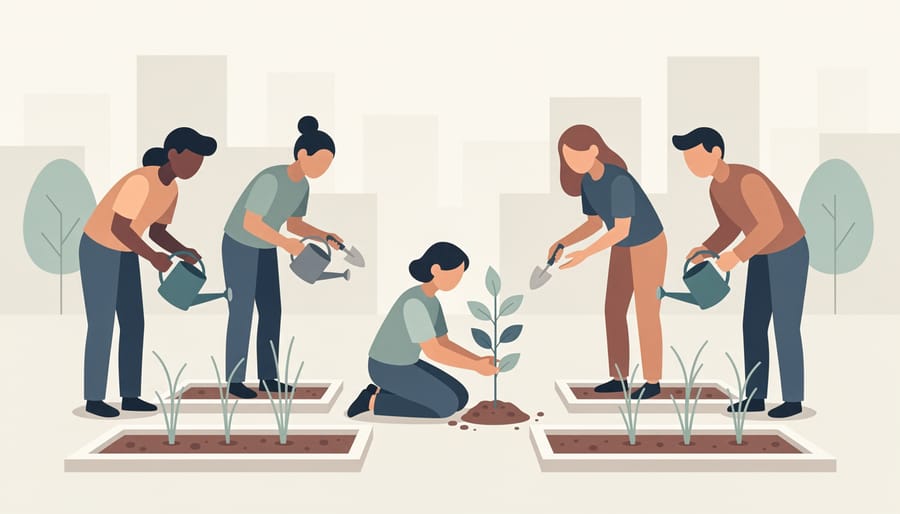
Meet three young leaders who turned deep listening into breakthrough action, proving that understanding others isn’t just nice, it’s necessary for creating change that actually works.
Aisha’s Literacy Revolution in Rural Kenya
When 19-year-old Aisha Mutiso noticed girls in her village dropping out of school, she didn’t assume she knew why. She spent three months conducting listening sessions with students, parents, and teachers. What she discovered surprised her: it wasn’t lack of resources but shame about not understanding lessons taught only in English. Girls felt too embarrassed to ask questions, so they left.
Aisha created peer-learning circles where students taught each other in Swahili first, then translated concepts into English together. No fancy technology, no expensive materials, just empathy-driven design that removed the real barrier. Within two years, her model spread to twelve schools and dropout rates fell by 40%. By genuinely understanding the problem from the inside, she built something communities embraced rather than resisted.
Marco’s Waste-to-Resource Network in São Paulo
Marco Silva grew up in São Paulo watching waste pickers work dangerous 14-hour days for poverty wages. Instead of creating another charity that treated them as people to be helped, he spent six months working alongside them, learning their routes, challenges, and expertise. He discovered they already knew which materials had value, they just lacked connections to buyers and fair pricing.
Marco built a digital platform connecting waste pickers directly with recycling companies, eliminating exploitative middlemen. But he didn’t stop there. Drawing on what he’d learned about their pride and professionalism, he added skills training and business development tools they requested. His approach transformed waste pickers into environmental entrepreneurs, tripling average incomes while diverting tons of material from landfills. That’s empathy driving real success not for them, but with them.
Priya’s Inclusive Tech Movement in Mumbai
Priya Sharma noticed Mumbai’s booming tech scene had zero programmers with disabilities. Rather than blame discrimination alone, she interviewed dozens of young people with disabilities about their actual experiences. The pattern was clear: coding bootcamps and tech companies claimed to be open but designed everything for able-bodied participants, from inaccessible venues to time-pressured tests that disadvantaged people with different processing needs.
Priya launched an inclusive coding academy that consulted disabled learners at every design stage. Flexible pacing, multiple assessment formats, accessible materials from day one. She then partnered with tech companies, showing them that inclusion wasn’t charity, these graduates brought problem-solving perspectives that led to better products. Her first cohort achieved 85% job placement, and five companies redesigned their entire hiring processes after seeing the results.
Each story proves the same truth: empathy isn’t the soft part of changemaking. It’s how you find problems worth solving and build solutions people actually need.
How to Build Your Own Empathy Practice
Building empathy isn’t abstract theory. It’s daily practice, concrete actions you can start today. Here’s how to make it real.
Start with structured listening in your own community. Pick a challenge you care about, then talk to at least ten people who experience it firsthand. Not surveys, actual conversations. Ask open questions: “What’s hardest about this?” and “What have you tried?” Then stay quiet and genuinely hear the answers. Record what surprises you, not what confirms what you already believed.
- Choose your focus issue and identify diverse voices experiencing it directly
- Prepare open-ended questions that explore experience rather than validate assumptions
- Schedule 20-30 minute one-on-one conversations in comfortable settings for participants
- Listen actively without interrupting or offering immediate solutions
- Take detailed notes on unexpected insights and emotional reactions
- Follow up with clarifying questions about specific experiences they shared
- Synthesize patterns across conversations while preserving individual stories
These listening sessions reveal what statistics never will: the texture of people’s daily reality, the workarounds they’ve created, the solutions they’ve already imagined but lack resources to build.
Seek out cross-cultural exchanges deliberately. Join organizations connecting young leaders globally. Attend community events outside your usual circles. When you meet someone from a different background, ask about their path and their perspective on challenges you’re tackling. The teaching entrepreneurship networks across Canada create exactly these connection points where diverse experiences meet innovative thinking.
Build reflection into your routine. After meetings, conversations, or community events, spend ten minutes writing what you learned about someone else’s perspective. What challenged your assumptions? Where did you miss something important? This isn’t journaling about yourself, it’s documenting how others see the world differently.
Find accountability through mentorship. The right mentor doesn’t just guide your business strategy. They model empathy in action, call you out when you’re making assumptions, and help you see blindspots in how you understand your community’s needs.
Practice perspective-switching with your team. Before finalizing any solution, assign someone to argue from the user’s viewpoint. What friction does this create? Who gets left out? Where does it miss the actual need? Make disagreement productive rather than defensive.
Common Empathy Mistakes and How to Avoid Them
Even the most well-intentioned young leaders stumble when developing empathy values. Recognizing these mistakes early helps you build genuine connections rather than just going through the motions.
Performative empathy happens when you focus more on being seen as empathetic than actually understanding others. It looks like sharing someone’s story on social media without taking action, or running a “listening session” where you’ve already decided the solution. Real empathy requires follow-through. If community members share their struggles with you, they should see those insights reflected in your work, not just your content calendar.
The savior complex creeps in when you assume you know what’s best for a community without their input. You might think, “I’ll solve this problem for them,” instead of, “How can I support their existing efforts?” This mistake often hits hardest when working across cultural or economic lines. Combat it by consistently asking, “Whose voices am I centering?” and “Am I amplifying or overshadowing?”
Assumption-making shortcuts genuine understanding. You meet one person experiencing homelessness and assume you understand all unhoused people. You read about a region’s challenges and think you grasp the full context. Each person’s experience is unique. Stay curious, ask questions, and resist the urge to fill knowledge gaps with stereotypes.
Empathy fatigue is real and often ignored. Constantly absorbing others’ pain without boundaries will drain you completely. Protect your wellbeing by setting clear limits on emotional labor, taking breaks from heavy stories, and building a support network. You can’t pour from an empty cup, sustainable changemaking requires sustainable empathy practices. Recognize when you need to step back and recharge without guilt.
Empathy and Disruption: Your Next Steps
Understanding others isn’t a detour from disruption, it’s the fastest path to it. When you grasp what people genuinely need, you skip years of building the wrong thing. Start small this week: spend one hour listening in a community space you want to serve, without pitching or planning. Just absorb. Notice what surprises you, what contradicts your assumptions, what patterns emerge.
Next, test your ideas through conversation before committing resources. Share your concept with five people from different backgrounds and genuinely listen to their responses. Their insights will sharpen your vision faster than months of isolated planning. Consider forming business partnerships with people whose lived experiences differ from yours, they’ll spot blind spots you’d miss and strengthen solutions you’re building together.
Make empathy a daily practice, not a one-time exercise. Set aside fifteen minutes each day to step into someone else’s perspective through conversation, reading diverse voices, or reflecting on feedback you’ve received. Track what you learn. The changemakers creating the most meaningful disruption aren’t choosing between empathy and action, they’re using understanding as fuel for bolder moves.
The future belongs to leaders who refuse to choose between understanding people and changing the world. Empathy values and creative disruption aren’t opposing forces, they’re partners in transformation. When you listen deeply to your community before building solutions, you create innovations that last. When you lead with compassion while taking bold action, you inspire others to join your movement.
You’ve seen how young changemakers across the globe are proving this daily. They’re not waiting for permission or perfect conditions. They’re combining genuine understanding with courageous experimentation, turning insight into impact.
Your empathy makes you a better entrepreneur. Your willingness to disrupt makes you a more effective advocate. Together, these strengths position you to tackle challenges others overlook and create solutions that genuinely serve.
The global community of young leaders grows stronger when we see each other clearly, honor diverse perspectives, and channel our understanding into action. Start where you are. Listen to one person whose experience differs from yours. Identify one problem worth solving in your community. Take one bold step toward change.
Lead with heart. Disrupt with purpose. The world needs exactly what you have to offer.
Frequently Asked Questions
Can you actually learn empathy, or is it something you’re born with?
Empathy is absolutely a skill you can develop through practice. While some people might have natural tendencies toward empathy, actively listening to diverse perspectives, engaging with unfamiliar communities, and reflecting on others’ experiences strengthens your empathetic capacity over time.
Does focusing on empathy slow down decision-making when I need to move fast?
Empathy actually speeds up effective decision-making because it helps you understand the real problem from the start. Taking time to listen prevents you from building solutions nobody wants or fixing the wrong issue entirely, which saves months of wasted effort down the road.
How do I show empathy when working across different cultures?
Start by admitting what you don’t know and asking genuine questions rather than making assumptions. Learn about cultural contexts that shape how people experience problems, and invite community members to guide the solution design rather than positioning yourself as the expert.
Can a business really be both empathetic and disruptive at the same time?
The most successful disruptive businesses are deeply empathetic because they identified a pain point others overlooked. Empathy reveals where systems fail people, and disruption creates better alternatives, they’re partners, not opposites.
How do I avoid burnout from caring too much about everyone’s problems?
Set clear boundaries about when and how you engage with community needs, and build a team so the emotional labor isn’t all on you. Empathy doesn’t mean absorbing everyone’s pain, it means understanding their experience well enough to create solutions that work, then trusting those solutions to do their job.
These questions come up constantly in conversations with young changemakers navigating the tension between caring deeply and acting decisively. You’ll face moments when empathy feels like it’s pulling you in too many directions or slowing your momentum. That’s normal. The key is remembering that empathy isn’t about feeling everything all the time, it’s about understanding strategically so you can disrupt effectively. When you treat empathy as intelligence gathering rather than emotional overwhelm, it becomes your competitive advantage instead of your burden.


