 david
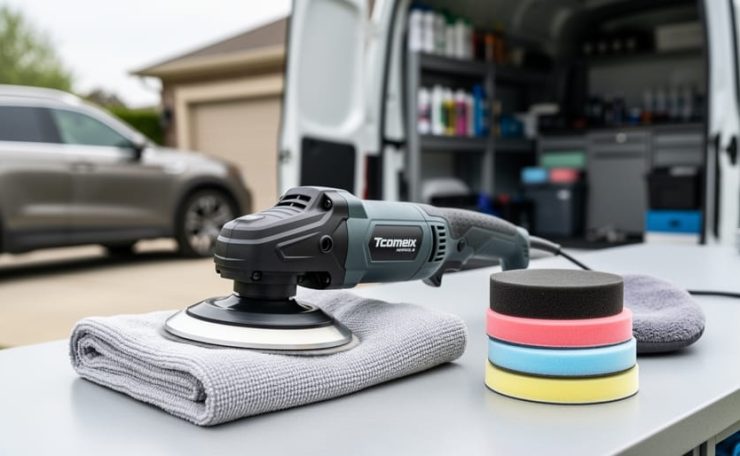
Your first mobile detailing polisher should be a dual-action (DA) model in the $150, $250 range, and the Griots G9 stands out as the top value pick for 2026. Young entrepreneurs launching paint-stroke businesses often spend months agonizing over this decision, but the answer is simpler than you think: choose a beginner-friendly DA polisher that balances safety, results, and cost.
Here’s why this matters for your side hustle. A rotary polisher cuts faster but demands experience you don’t have yet. One wrong move burns through paint and destroys your reputation before you’ve built one. DA polishers forgive mistakes while delivering professional finishes that turn one-time clients into repeat customers. That’s the difference between a hobby and real income.
The Griots G9 earned its reputation among mobile detailers for good reason. Community feedback confirms it delivers consistent results at $199 with free shipping from retailers like Carzilla, putting professional-grade work within reach of student budgets. If the G9 is out of stock, Barjack Tools offers solid alternatives that detailers recommend for occasional jobs.
But the tool is just the starting point. New mobile detailers make predictable mistakes that cost them time and clients: buying the wrong pad-and-polish combinations, skipping proper paint correction technique, or choosing a car polisher based on YouTube hype instead of real-world mobile use. This guide walks you through the decision factors that actually matter, compares polisher types so you understand what you’re buying, and shows you how to avoid the traps that sink beginners before their first paying customer.
Why Your First Polisher Choice Matters
Your first polisher isn’t just a tool, it’s the foundation of your mobile detailing business and a test of your commitment to the entrepreneurial path. Choose wrong, and you’ll burn through cash on gear that sits unused, or worse, damage a client’s paint and lose the confidence to keep going. Choose right, and you’ll have a reliable partner that lets you deliver results, build your skills, and reinvest earnings into growth instead of replacing broken equipment.
Starting a side business means every dollar counts. If you overspend on professional-grade equipment before you’ve landed your first five clients, you’re digging a financial hole that kills motivation. The smart move is finding a polisher that balances quality and affordability, letting you prove the business model works before scaling up. At around $199 for something like the Griots G9, you can get started without waiting months to save or taking on debt.
Beyond the price tag, your first polisher shapes how quickly you master the craft. A machine that’s too aggressive or complicated will make every job stressful, increasing the risk of costly mistakes. You need something forgiving enough to practice on contours and smaller sections without fear, building the muscle memory and confidence that separates hesitant beginners from entrepreneurs who hustle for repeat clients.
Finally, this choice determines whether you can actually deliver the transformation clients expect. A cheap, unreliable polisher won’t cut through oxidation or swirls consistently, leaving you with mediocre results and no word-of-mouth referrals. The right tool lets you create that wow factor that turns one-time customers into loyal advocates, fueling the growth every young changemaker dreams about when starting their journey.
What to Look for in Your Starter Polisher
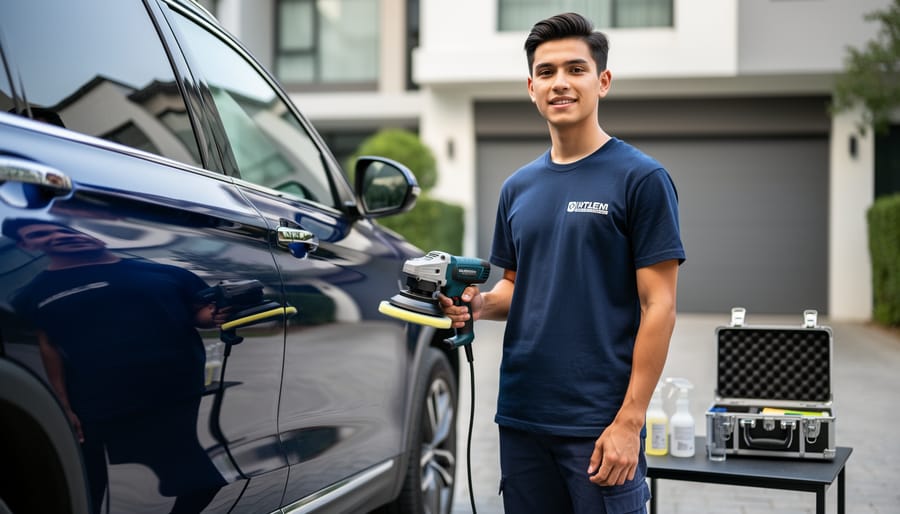
Your first polisher isn’t about buying the fanciest tool on the shelf. It’s about finding a machine that lets you deliver results while you’re still learning, without draining your startup budget or sitting unused after a few frustrating sessions.
Start with beginner-friendliness. You want a polisher that forgives your mistakes as you develop technique. Random orbital (DA) polishers lead here because they reduce the risk of burning through paint if you linger too long in one spot. The machine does much of the corrective work for you, letting you focus on learning proper pressure and pad selection rather than fighting the tool itself.
Value matters when you’re bootstrapping a side business. The sweet spot sits around $200, where you get reliable performance without overpaying for professional-grade features you won’t use yet. Community feedback consistently points to options like the Griots G9, which sells for $199 with free shipping, as proof you don’t need to spend $400 to serve your first clients well.
Look for these core features when comparing models:
- Random orbital action that prevents paint damage while you learn proper technique
- Variable speed control to adjust for different paint conditions and correction levels
- Comfortable, balanced grip that won’t leave your hands cramping after a full hood
- Cord length sufficient for mobile work, or battery life that covers at least two vehicles
- Backing plate compatibility for different sizes, typically 5-inch for versatility
Versatility keeps you ready for different jobs. Soft paint on a black sedan needs different settings than hard clearcoat on a white truck. A polisher with adjustable speed lets you dial in the right aggressiveness without owning multiple machines.
Portability can’t be an afterthought for mobile work. You’re loading and unloading between jobs, not working in a climate-controlled garage. Weight, balance, and how the machine packs into your kit all matter when you’re hauling gear to driveways and parking lots.
Build quality determines whether your investment lasts through your first fifty jobs or fails at fifteen. Check community reviews for patterns around motor reliability and housing durability. A polisher that quits mid-correction costs you more than the replacement price, it costs client trust and your reputation as someone who delivers.
Types of Car Polishers Compared
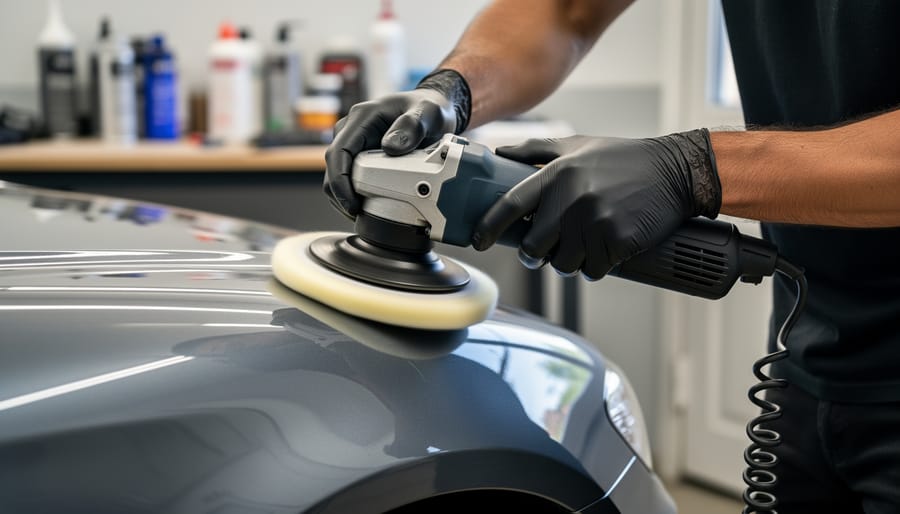
When you’re shopping for your first car polisher, you’ll encounter three main types: dual-action (DA) polishers, rotary polishers, and forced rotation machines. Understanding the differences helps you choose wisely and avoid buyer’s remorse.
A dual-action polisher, often called a DA or random orbital polisher, moves in two directions at once: the pad spins while the entire head oscillates. This dual motion spreads heat and pressure across the paint, making it tough to burn through clearcoat even if you linger too long in one spot. For beginners launching a mobile detailing side business, DAs deliver solid correction on smaller panels and follow curves without the white-knuckle fear of causing damage. They’re forgiving teachers.
Rotary polishers spin in a single circular motion, generating more heat and cutting power. Professionals love them for heavy correction work, but that same aggressive action means a moment’s lapse can leave a burn mark or holograms in the paint. If you’re just starting out, rotaries demand skills you haven’t built yet. Save them for later, once you’ve mastered paint reading and pressure control.
Forced rotation polishers, sometimes called gear-driven DAs, sit between the two. They combine oscillation with a mechanically driven spin, offering more correction than a standard DA without the full danger of a rotary. They’re gaining popularity, but for a first purchase on a tight budget, they add complexity you don’t need yet.
| Polisher Type | Best for Beginners | Learning Curve | Risk of Damage | Typical Use Case |
|---|---|---|---|---|
| Dual-Action (DA) | Yes | Gentle | Low | Light to moderate correction, smaller sections, safe practice |
| Rotary | No | Steep | High | Heavy correction, experienced users, larger flat panels |
| Forced Rotation | Maybe | Moderate | Moderate | Mid-level correction, users upgrading from DA |
The overwhelming community consensus points to DA polishers for your first machine. They let you practice technique, build confidence with real clients, and deliver results without the constant worry that one slip will ruin someone’s hood. You’re not cutting corners by starting with a DA, you’re making the smart entrepreneurial choice that lets you grow your skills while you grow your business.
Top Recommendations for 2026
Best Overall Value: Griots G9
The Griots G9 consistently earns its reputation as the go-to starter polisher for young entrepreneurs launching their mobile detailing ventures. One Reddit detailer picked one up from Carzilla for $199 with free shipping, calling it “probably your best bang for your buck”, a sentiment echoed across the community. That price point sits in the sweet spot where you’re investing in quality without draining your startup budget before you’ve landed your first client.
What makes the G9 particularly valuable for mobile work is its performance on smaller sections and contours. Car detailing isn’t just about wide, flat panels. You’ll encounter mirrors, door handles, curved bumpers, and intricate body lines where a more compact, maneuverable machine shines. The G9 handles these challenges without the bulk or learning curve of professional-grade gear, letting you deliver solid results while you’re still building your confidence and technique.
For young changemakers who want to prove their business concept before scaling up, the G9 represents smart capital allocation. You’re not overspending on features you won’t use yet, but you’re also not buying cheap equipment that’ll frustrate you or damage a client’s paint. It’s the pragmatic choice that lets you focus on what matters most: mastering the craft, delighting customers, and growing your side business one polished hood at a time.
Worth Exploring: Barjack Tools and Other Options
Barjack Tools surfaced in community discussions as another option worth considering for mobile detailing starters. While you won’t find the same depth of reviews as the Griots G9, the Facebook recommendation suggests it’s earned respect among working detailers, exactly the kind of grassroots endorsement that often signals real-world value.
Here’s the entrepreneurial approach: treat this as a research opportunity, not a done deal. Check current availability and pricing for Barjack Tools, then compare specs side-by-side with the G9. Look for user feedback on handling smaller sections and contours, since that’s where mobile work lives. The cheapest option isn’t always the smartest, but a lesser-known brand that delivers can stretch your startup budget further. Do your homework, weigh the trade-offs, and make the call that fits your business vision.
Mistakes to Avoid When Buying Your First Polisher
When you’re starting out, it’s tempting to grab the first polisher that fits your budget or looks professional in the photos. But a few common missteps can derail your progress before you finish your first job. The good news? They’re all avoidable once you know what to watch for.
The biggest mistake is overspending on pro-level gear before you’ve even mastered the basics. You don’t need a high-end rotary or a machine loaded with features you won’t use for months. Focus on a reliable dual-action polisher that lets you build skills without the anxiety of burning through paint. Save the advanced tools for when your business demands them.
Speaking of rotary polishers, choosing one as your starter machine is a setup for frustration. Yes, they can correct paint faster in experienced hands, but they also amplify every mistake you make. As a beginner juggling mobile work and learning curves, a DA polisher gives you the forgiveness you need to deliver solid results without risking damage that tanks your reputation.
Don’t overlook ergonomics, either. If your polisher feels heavy or awkward after fifteen minutes, imagine how your hands will feel after a full detail. Hand fatigue isn’t just uncomfortable; it affects your control and the quality of your work. Pick a machine you can handle comfortably for extended sessions.
Here are a few other pitfalls that catch new detailers off guard:
- Buying the cheapest no-name option that breaks after a handful of jobs
- Choosing based on flashy marketing or aesthetics instead of verified reviews
- Neglecting to budget for quality pads and compounds alongside the polisher
- Forgetting to check warranty coverage and customer support availability
Finally, skipping research is the fastest way to waste money. Take the time to read what real users say, watch tutorials, and compare options. Treat this purchase as an investment in your entrepreneurial journey, not just another tool. When you do your homework, you make a confident choice that sets you up for success instead of second-guessing yourself down the road.
Getting Started: From Purchase to First Client
You’ve got your polisher. Now what?
Don’t jump straight into client work. Practice first on old body panels from a junkyard, or dedicate a weekend to your own car. Get comfortable with how the machine feels in your hands, how much pressure works without bogging down, and how compound spreads across different panel sizes. This hands-on experimentation builds muscle memory and confidence, two things you can’t fake when you’re kneeling in a client’s driveway.
Watch tutorial content obsessively. YouTube channels run by experienced detailers break down pad selection, compound application, and arm movement in ways that make sense for beginners. Pause, rewind, and take notes. Then replicate what you’ve learned on your practice panels until it clicks.
Connect with the detailing community online and locally. Facebook groups, Reddit threads, and forums are full of people who’ve already made the mistakes you’re about to avoid. Ask questions, share your progress, and don’t hesitate to find a mentor who’s a few steps ahead in the mobile detailing game. Skilled-trades mentorship can shortcut your learning curve dramatically.
When you’re ready to price your first services, start competitively. Charge enough to cover supplies and your time, but recognize you’re still building your reputation. Offer discounts to friends and family in exchange for testimonials and before-and-after photos. Use free tools like scheduling apps and invoicing templates to look professional from day one.
Mastering your polisher isn’t just about technique. It’s about proving to yourself that you can turn a tool purchase into a sustainable side business, one satisfied client at a time.
Common Questions About Your First Car Polisher
Starting a mobile detailing side business brings up plenty of practical questions, especially when you’re investing your first dollars in equipment. Here are the answers to the most common concerns young entrepreneurs face when choosing their first car polisher.
Do I need a polisher to start mobile detailing?
Not immediately. You can launch with hand washing and basic interior work, then add polishing services as you grow. However, owning a polisher expands your service menu and lets you charge more, making it a smart early investment for serious side hustlers.
Can I use a buffer instead of a polisher?
Buffers typically refer to rotary polishers, which generate more heat and require experienced technique to avoid paint damage. For beginners, dual-action polishers are safer and more forgiving while still delivering professional results.
How much should I spend on my first polisher?
Expect to invest between $150 and $250 for a quality starter DA polisher. The Griots G9, for example, sold for $199 with free shipping at Carzilla, hitting that sweet spot of affordability without compromising performance.
How do I avoid damaging paint while learning?
Practice on old panels or your own vehicle first, use moderate speed settings, keep the polisher moving, and never apply excessive pressure. Watching tutorial videos and starting with less aggressive pads builds confidence before you tackle client cars.
These questions reflect real concerns from the detailing community, where beginners often search for the cheapest half-decent DA polisher that won’t let them down. Remember, your first polisher doesn’t need to be perfect. It needs to be good enough to help you learn, serve clients well, and prove to yourself that you can build this business. As you gain experience and clients, you’ll know exactly what features matter most for your next upgrade.
Choosing your first car polisher isn’t just about buying equipment, it’s about taking ownership of your entrepreneurial future. Mobile detailing offers young leaders a real path to build something meaningful: a service that serves your community, sharpens your business skills, and generates income on your own terms. The Griots G9 or whichever starter polisher you choose becomes your tool for proving what’s possible when you commit to learning and delivering quality work.
You don’t need a massive investment or years of experience to get started. You need curiosity, a willingness to practice, and the confidence to take that first paying client. Every successful entrepreneur started somewhere, often with modest tools and big ambition. Your polisher is the bridge between “I want to start a business” and “I’m running a business.”
The global community of young changemakers grows stronger when people like you step up and build something real. Mobile detailing teaches resilience, customer service, and craftsmanship, skills that extend far beyond cars. So grab your polisher, practice until you’re confident, and then put yourself out there. Your community needs your energy and your service. The future you’re building starts the moment you take action. Go make it happen.